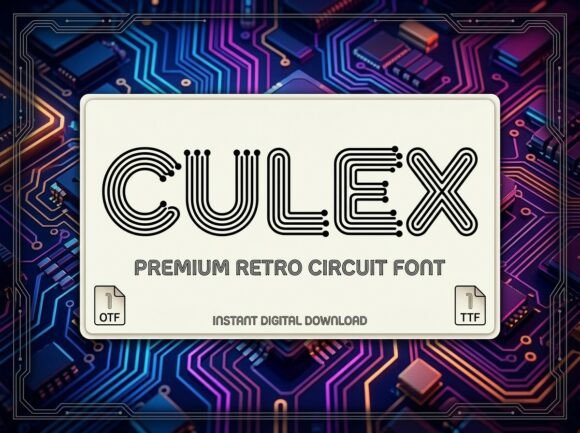
Culex: Wiring Your Designs for a Cybernetic Future
There's a specific kind of energy that pulses through the circuits of the 1980s and into the neon-soaked visions of tomorrow. It's the glow of a CRT monitor in a dark room, the intricate dance of traces on a green motherboard, and the electric hum of a future we once only dreamed of. Capturing that feeling in a brand is no small task. You need more than just a font; you need a signal, a piece of visual hardware that feels both nostalgic and shockingly new. This is the space where Culex operates, a high-voltage display typeface built for projects that demand a "cybernetic-and-cinematic" soul.
A Typeface Forged in Digital Circuitry
At its core, Culex is a bold, geometric display font, but that simple description barely scratches the surface. Its true character is revealed in the details. Imagine the letterforms are not merely drawn, but wired. Each character features rhythmic, hand-drawn multiline "traces" that flow and connect like pathways on a circuit board. These are punctuated by circular nodes that act as connection points, giving the typography a tangible, engineered feel. It’s this unique combination that bridges the gap between the raw, technical aesthetics of early computing and the sleek, forward-thinking branding of today.
The font carries a heavy structural weight, lending it an immediate sense of presence and importance. This isn't a typeface for whispering; it's for making a declaration. Its technical personality is unmistakable, making it a premier choice for anyone looking to inject a dose of encoded, electric energy into their work. For independent e-sports teams, it’s the roar of the crowd distilled into a logo. For tech startups, it’s the visual representation of innovation and complex systems made simple. For retro gaming interfaces, it’s a direct line back to the arcades, while for social media headers, it’s an instant attention-grabber that promises something exciting and different.
From Brand Identity to Social Media Buzz: Practical Applications
Theory is one thing, but where does a powerful display font like Culex truly shine? Its strength lies in high-impact applications where first impressions are everything. Think of it as a specialized tool in your design toolkit, perfect for specific jobs that require a heavy dose of personality and visual flair.
For branding and logo design, Culex is a game-changer. A tech company launching a new app, a cybersecurity firm, or even a local independent game developer can use it to create a logotype that is instantly recognizable and packed with meaning. The "traced" letterforms suggest connection, data flow, and intricate processes, telling a story about the brand before a customer even reads a word. It helps build brand recognition by creating a visual identity that is both unique and thematically resonant.
Beyond the logo, consider its use in packaging and merchandise. A craft brewery could use Culex for a limited-edition "Voltage" IPA, creating a can design that leaps off the shelf. A music producer could use it for album art that channels a synth-wave aesthetic. On merchandise like t-shirts, hoodies, and posters, the font becomes a statement piece, allowing fans to wear a piece of the brand's electric identity.
In the digital realm, the applications are just as potent. Use Culex for:
- Social Media Graphics: Create headers for Twitter and YouTube channels that establish a strong, tech-forward vibe. Design promotional posts for events or product launches that stop the scroll.
- Websites and Blogs: While too stylized for body text, it's perfect for hero sections, headlines, and call-to-action buttons that need to command attention. A tech blog could use it for article titles to give its content a more authoritative and specialized feel.
- Digital Products and Marketing Assets: Design compelling covers for e-books, eye-catching graphics for online courses, or memorable headers for email marketing campaigns.
Even in print materials and editorial layouts, Culex can be a powerful accent. Use it for the title of a poster, the cover of a niche magazine, or the chapter headings in a book about video game history or future technology. Its heavy weight and unique texture provide a strong visual anchor that can guide the reader's eye and set a distinct mood.
Making Culex Work for You: A Practical Guide
Integrating a display typeface with such a strong personality requires a thoughtful approach. Its power is immense, but using it effectively is key to achieving a professional presentation and clear readability. The goal is to let Culex be the star of the show without overwhelming the rest of your design.
The most critical piece of advice is to reserve it for headlines and short bursts of text. Its intricate, multiline details are designed for impact at larger sizes. Setting a full paragraph in Culex would quickly become tiring for the eyes. Instead, let it establish the theme and then pair it with a clean, highly legible sans-serif or serif font for body copy. A font like Helvetica, Inter, or even a classic serif like Garamond can provide a calm, readable counterpoint to Culex's electric energy. This contrast is a fundamental principle of modern typography and is essential for a balanced and professional layout.
Before committing to a project, test your font pairings. Type out a sample headline with Culex and a paragraph with your chosen body font. Do they complement each other? Does the body font get lost, or does it stand on its own clearly? This simple step can save you hours of frustration later. Also, consider the context. A retro gaming interface might be able to handle more of the font than a corporate tech startup's website, which would call for a more restrained application.
When you acquire a premium font like Culex, take the time to review all the included font styles and character sets. Often, these creative fonts come with different weights, stylistic alternates, or special ligatures that can add another layer of customization to your designs. Exploring these options allows you to fine-tune the typography to perfectly match your project's goals.
Finally, always be mindful of commercial licensing. If you're using Culex for a client project, a product you sell, or a business identity, ensure you have the correct commercial license. This is a non-negotiable part of using design assets professionally and protects both you and the font's creator.
More Than a Font: A Piece of Visual Hardware
Culex isn't just a collection of letterforms; it's a design asset that carries a story. It speaks of innovation, technical prowess, and a future that was imagined decades ago. By choosing it for your next project—be it a logo, a social media campaign, or a piece of merchandise—you're not just picking a typeface. You're wiring your design for success, giving it a personality that is both deeply rooted in a specific aesthetic and powerfully effective in the modern visual landscape. It’s a tool for creators who want their work to resonate with energy, precision, and a touch of cinematic flair.